From Bill-Paying Stress to Weekend Freedom: How Smart Tech Gave Me My Evenings Back
Life used to follow a familiar rhythm: Friday evenings meant one thing—sitting down with a stack of utility bills, calculator in hand, trying to make sense of charges that never seemed to add up. I’d lose hours to spreadsheets, phone calls, and confusion. But not anymore. A few simple tech tools quietly transformed that stress into freedom. Now, my weekends begin with coffee and quiet—not chaos. Let me show you how the right technology didn’t just cut my bills, but gave me back something far more valuable: time.
The Weekend That Changed Everything
It was a rainy Friday night, the kind where the house feels too quiet and the to-do list too loud. My kids were finally asleep, the kitchen cleaned, and there I was—again—surrounded by envelopes. Red stamps. Late fees. Numbers that made no sense. The water bill was up 20% from last month. The electric bill? Even worse. I remember staring at the paper, my fingers gripping the edge like I could somehow squeeze clarity out of it. My husband walked by, kissed the top of my head, and said, “You’re still at that?” I nodded, too tired to speak. He didn’t mean to make me feel worse. But in that moment, I felt invisible—like all my effort to keep things running smoothly was invisible, too.
I wasn’t just paying bills. I was fighting a system that felt rigged. I didn’t know how much energy we were using, when we were using it, or why the numbers jumped some months and not others. I’d call customer service, wait on hold, repeat my address three times, only to be told, “It’s based on your usage.” No help. No answers. Just more frustration. And every month, it stole a piece of my weekend—the time I’d promised myself to rest, to read, to just *be*. That night, I whispered to myself, “There has to be a better way.” And that whisper? It was the start of everything.
Meet My New Home Assistant (It’s Not Who You Think)
When I first heard about smart energy monitors, I pictured something complicated—wires, blinking lights, a manual longer than a novel. But what I found was the opposite. My new “assistant” wasn’t a robot or a voice in the ceiling. It was a small device that clipped onto my electrical panel, connecting to an app on my phone. That’s it. No installation drama. No electrician. Just plug, pair, and go.
Within minutes, I could see exactly how much power my home was using—live. Not estimated. Not a guess. Real-time. And that changed everything. I remember the first time I noticed a spike while watching TV. I looked around—lights off, oven off, no one in the kitchen. Then I realized: the laundry machine. It had finished its cycle hours ago, but it was still drawing power in “standby” mode. We call it “phantom load,” but I started calling it “the silent bill-stuffer.” That one little insight saved me $15 that month. Not a fortune, but it was mine. And it was *visible*.
What surprised me most wasn’t the savings—it was the peace. Knowing where the energy was going made me feel like I was back in charge. I wasn’t guessing anymore. I wasn’t blaming my kids for leaving lights on or wondering if the fridge was broken. I had data. And with data came control. One evening, I said out loud, “Wait, the laundry machine uses *that* much after 8 PM?” My daughter overheard and said, “Mom, you sound like a detective.” I laughed. But she was right. I was solving mysteries in my own home.
Automation That Actually Works for Real Life
I’ll be honest—I used to roll my eyes at the phrase “smart home.” It sounded like something for people with too much money and too much time. But then I tried a $15 smart plug. I plugged my coffee maker into it. Set it to turn on at 6:45 AM. And suddenly, the smell of coffee greeted me every morning like a warm hug. No fumbling in the dark. No waiting. Just comfort, on demand.
That tiny win made me curious. What else could I automate? I got a smart thermostat—not the flashy kind with a screen, just one that learns. I didn’t have to program it like a robot. I just lived in my house, and it watched. After a week, it knew when we woke up, when we left, when we came back. Now, the house is warm when we walk in the door in winter. Cool when we get home on a summer day. And when we leave for the weekend? It switches to “away” mode automatically. No more forgetting to adjust the temperature and coming home to a $200 bill.
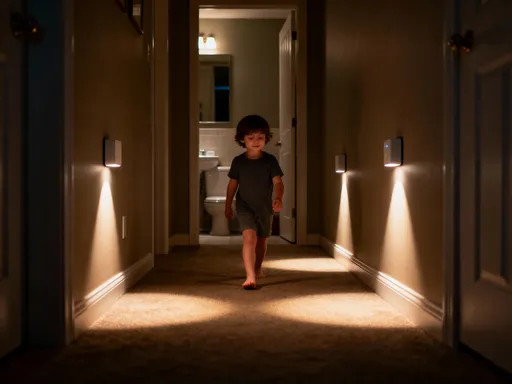
The magic isn’t in perfection. It’s in forgiveness. I still forget things. But now, my home remembers for me. Movie night? The living room lights dim at 7 PM. Morning routine? The hallway lamp turns on at 6:30, so I don’t trip over backpacks. It’s not about living in a futuristic bubble. It’s about creating a home that supports us—our rhythms, our messiness, our real lives. And every time I walk into a room that’s just right, I feel a little more seen.
Alerts That Feel Like a Friend Texting You
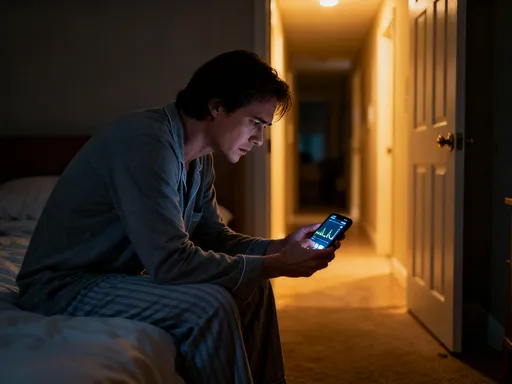
One of my favorite features isn’t flashy. It’s simple: notifications. But not the kind that make you jump. These are gentle, like a friend checking in. “Hey, your AC’s been running for 12 hours straight. Want to turn it down?” Or, “Water usage is higher than usual. Maybe a leak?”
I’ll never forget the weekend we drove to my sister’s cabin. We’d been gone two hours when my phone buzzed. “Heater is still on. Temperature inside: 78°F.” I almost panicked. But then I opened the app, turned it down to 62°F, and went back to singing along to the radio with my kids. That one alert saved me at least $40—and maybe prevented a pipe burst. But more than that, it gave me peace. I didn’t have to carry the weight of “Did I remember?” in my chest anymore.
These alerts aren’t nagging. They’re supporting. They don’t judge me for forgetting. They don’t shame me for using too much. They just offer a quiet heads-up—like a neighbor waving from across the street. And over time, I started noticing patterns. I learned that running the dishwasher at noon costs less than at 7 PM. That turning off the guest room heater in summer cuts waste. The alerts didn’t just save energy—they taught me how to live smarter, without effort.
One Dashboard to Rule My Bills
Before, managing my home felt like juggling. Electricity: one website. Water: another. Gas: a third, with a password I kept forgetting. I’d spend 20 minutes just logging in, only to close the tab when I got overwhelmed. It wasn’t laziness. It was exhaustion. Too many places. Too much noise.
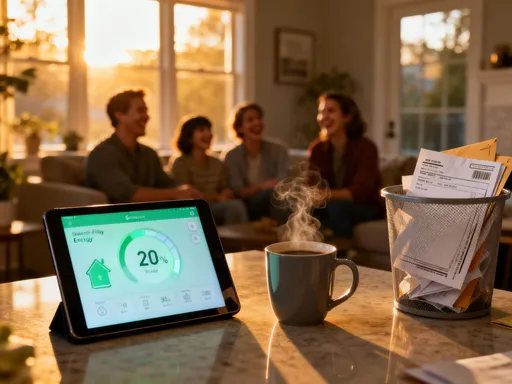
Then I found a single energy management platform that pulled everything together. One login. One screen. Electricity, water, gas—all in one place. I could see my usage over time, compare months, set goals. I even added my solar panels (yes, we went solar last year!) and watched how much we were sending back to the grid. It felt like getting a report card for my home—and finally, I was passing.
The emotional shift was real. Before, I felt like a victim of my bills. Now, I feel like a manager. I can spot trends. I can plan. I can celebrate when we use less. Last month, we used 18% less energy than the same time last year. I took a screenshot and sent it to my family group chat. My son replied, “Nice, Mom! Can we use the savings for pizza?” We laughed. But it was true—we were making better choices, together. And seeing it all in one place made it real, not abstract.
The Ripple Effect on Family Time and Peace of Mind
The biggest change wasn’t in my bills. It was in my life. I used to dread Friday nights. Now, I look forward to them. No more calculator. No more red envelopes. Just me, my coffee, and the quiet joy of a weekend well begun.
But it’s not just about me. My kids notice the difference too. Saturday mornings used to be tense—me hunched over the laptop, correcting numbers, explaining why we couldn’t afford that outing. Now, we talk. We laugh. We plan. Last weekend, we baked cookies and played board games. No agenda. No stress. Just us.
And here’s something I didn’t expect: fewer arguments. Money stress used to leak into everything. A comment about the grocery bill. A sigh when the dryer light came on. Now, we talk about energy like it’s part of our team. “Hey, did you remember to unplug the charger?” “Nice job turning off the lights!” It’s not policing. It’s partnering. We’re all in it together. And that’s made us closer—not just to the planet, but to each other.
I used to think technology made us distant. But this kind? It’s brought us closer. It’s not replacing conversation. It’s creating space for it. And that, to me, is the real win.
Starting Small: Your First Step to Weekend Freedom
If you’re reading this and thinking, “This sounds great, but I don’t have time to become a tech expert,” I see you. I was you. You don’t need to overhaul your home overnight. You don’t need to spend a fortune. You just need to start.
Here’s my advice: pick one thing. Just one. Maybe it’s a smart plug for your coffee maker. Maybe it’s downloading an app that tracks your energy. Maybe it’s setting one alert—like “notify me if the AC runs more than 8 hours.” Try it for a week. See how it feels.
Don’t aim for perfection. Aim for progress. Some days, you’ll forget. Some weeks, nothing will change. That’s okay. The point isn’t to be flawless. It’s to reclaim your time, your peace, your weekends. And every small step adds up.
I didn’t set out to become a smart home guru. I just wanted my evenings back. And I got them. Now, when I sit with my coffee on a Friday morning, I don’t just feel relief. I feel proud. I took back control. I made my home work for me, not against me. And if I can do it, so can you.
So go ahead. Pick one thing. Try it. And imagine your next weekend—calm, quiet, yours. Because you don’t have to wait for freedom. You can start building it today, one small tech step at a time.