Tried 12 Shopping List Apps Over 8 Months: The One That Finally Synced My Family’s Chaos
Ever stood in the grocery aisle, phone in one hand, list in another, kids asking for snacks, while realizing half the items at home are already running out? I’ve been there—over and over. After months of forgotten ingredients, duplicated purchases, and family members editing (or deleting!) my lists without telling me, I nearly gave up. But then, one app quietly changed how we connect, plan, and care for each other through something as simple as a shopping list. It didn’t just fix our shopping. It softened the edges of our busiest days. And honestly? It made me feel a little more seen, a little more supported, in the daily rhythm of keeping a home.
The Grocery Run That Broke Me
It was a rainy Tuesday, the kind where the sky feels like it’s pressing down on your shoulders. I had just picked up the kids from soccer, their wet jackets leaving puddles on the backseat, and I was headed to the supermarket with what I thought was a solid plan. I’d made the list the night before—milk, eggs, whole wheat bread, apples, chicken thighs, coffee, toothpaste. Simple. Manageable. Or so I thought.
Halfway through the produce section, my phone buzzed. It was my husband: Did you get oat milk? The carton is empty. I checked my list. Oat milk wasn’t on it. I sighed and added it. Five minutes later, my teenage daughter texted: Mom, did you remember my protein bars? I need them for practice tomorrow. Another item missing. Then, my younger son, tugging my sleeve: Can we get those dinosaur cookies? I gave in, because who wins against dinosaur cookies after a long day?
By the time I reached checkout, my cart was overflowing—not with what we needed, but with what I’d forgotten, what others assumed I’d remembered, and what I’d impulsively added to keep the peace. At home, unpacking, I discovered three cartons of almond milk already in the fridge, two extra boxes of pasta, and a growing sense of defeat. That night, I sat at the kitchen table, staring at the mess of receipts and lists, and realized: this wasn’t just about groceries. It was about coordination. It was about trust. It was about feeling like we were all on the same team. And right then, I knew I needed a better system—one that could handle real life, not just a perfect checklist.
Why Most Shopping List Apps Fail Real Families
I’ve tried 12 different shopping list apps over the past eight months. Some were sleek. Some promised AI-powered suggestions. Others had beautiful interfaces that looked like they belonged in a design magazine. But almost all of them fell apart the moment more than one person touched the list. The problem wasn’t the idea—it was the execution. Most apps are built for individuals, not households. They assume one person is in charge, one phone does the listing, and everyone else just follows along. But that’s not how families work.
Take the first one I tried—clean layout, nice fonts, voice input. But when my husband added ketchup, I didn’t see it until I opened the app 20 minutes later. By then, I’d already bought my own. That’s because the app didn’t sync in real time. It saved changes, but not instantly. Then there was the one with color-coded categories—great for organization, terrible when my daughter tried to add “unicorn stickers” under “Produce” and accidentally wiped the entire dairy list. No undo button. No warning. Just gone.
Another app required everyone to log in with the same account. That meant my husband and I were sharing a single profile. Not ideal when one of us is adding “extra-strength pain relief” and the other is browsing for birthday candles. Privacy aside, it also meant no one could see who added what. When “toilet paper” appeared five times, we had no idea who was responsible—or if we actually needed five packs.
Some apps offered family sharing but made it complicated—invites that expired, permissions that reset, notifications that either flooded your phone or didn’t come at all. One sent me three alerts every time someone added gum. Another sent none when my son listed “emergency ice cream.” The irony? These tools were supposed to reduce stress, but instead, they added another layer of confusion. I started to wonder if the problem wasn’t the apps—it was me. Maybe I was asking too much. Maybe families just weren’t meant to share lists this way.
The Game Changer: An App That Finally Listened to Life
Then I found it. Not through an ad, not through a tech blog, but through a friend at school pickup who casually mentioned, You know, our family actually uses the same list now. And no one fights about it. That was enough. I downloaded it that afternoon.
At first glance, it wasn’t flashy. No animations, no bold colors, no promises of changing my life. But within an hour of setting it up, I noticed something different: when my husband added “olive oil,” I saw it appear on my phone instantly. Not after a sync. Not after a refresh. Instantly. And next to the item, his name appeared in small gray text. John added olive oil. That tiny detail changed everything.
The app allowed each family member to have their own profile. We each used our real names, and the app remembered who we were. When I added “dog food,” it didn’t just go on the list—it stayed under my name until I checked it off. If someone else bought it, they could mark it as purchased, and the app would note that too. No more guessing. No more duplicates.
But the real magic was in the quiet features. It learned. If I bought coffee every 10 days, it would gently remind me when we were running low. If my daughter consistently added yogurt on Thursdays, it started suggesting it midweek. Not pushy. Not demanding. Just helpful. And the best part? It worked offline. If one of us lost signal in the store, changes synced the moment we got back online. No lost updates. No frustration.
The first week, I held my breath. I expected a glitch, a crash, a moment where it all fell apart. But it didn’t. Instead, I got texts that said, Thanks for adding the tea—I was almost out, or I saw you needed bananas—I grabbed extra. Small messages. Big feelings. For the first time in years, grocery shopping felt like a shared act, not a solo mission.
How It Fixed More Than Just the Grocery List
What I didn’t expect was how much this simple tool would ripple through our home. It started with groceries, yes—but it quickly became more. We began using it for meal planning. I’d create a weekly list based on recipes, and the family could add preferences: Can we do tacos Friday? or Please no mushrooms this week. Instead of last-minute changes, we had conversation. Instead of resentment, we had collaboration.
Food waste dropped. Because we could see what was running low at a glance, we used things before they spoiled. I no longer opened the fridge to find a sad, forgotten zucchini at the back. The app even let us add expiration dates to items, so we got soft reminders like, Yogurt expires in 2 days—use it in smoothies? It wasn’t nagging. It was nudging. And it worked.
The “I thought you were buying that” arguments disappeared. No more coming home to find we had three types of mustard but no butter. No more emergency store runs because no one knew what was missing. The shared visibility meant we were all in the loop. And that changed the tone at home. Less stress. More trust.
But the most unexpected benefit was emotional. I started noticing small things—my husband adding my favorite chamomile tea when he saw the box was empty. My daughter remembering to list her brother’s favorite granola bars. My son, without being asked, adding “birthday card for Grandma” a week before her birthday. These weren’t grand gestures. They were quiet acts of attention. And they made me feel cared for in a way I hadn’t realized I needed.
The list became a language. A way of saying, I see you. I’m thinking of you. I’ve got your back. And that, more than any feature, is what kept me using it every single day.
Making It Work for Your Household: A Simple Setup Guide
If you’re thinking, This sounds great, but how do I actually get my family to use it?—I get it. Getting everyone on board can feel like herding cats. But it doesn’t have to be hard. Here’s how we did it, step by step, over a quiet Sunday afternoon with hot tea and zero pressure.
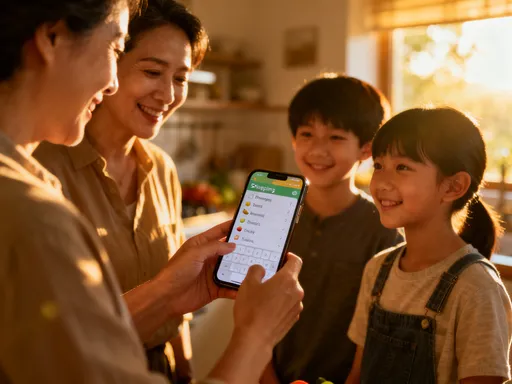
First, pick a time when everyone’s relaxed. Not during dinner cleanup or right before bedtime. We did it after brunch, when the kids were still in pajamas and my husband wasn’t buried in emails. I showed them the app on my phone, walked them through the home screen, and said, This is going to be our new family list. No more sticky notes on the fridge. No more last-minute texts. I kept it light. No rules. Just an invitation.
Next, we created individual profiles. Each person picked a name and a color—mine’s blue, my husband’s green, my daughter’s purple, my son’s red. It sounds small, but it made them feel ownership. When they add something, they see their color next to it. It’s their space. Their voice.
We set up three main lists: Groceries, Household Supplies, and Special Occasions. The first is for food. The second is for things like laundry detergent, light bulbs, trash bags. The third is for birthdays, holidays, or school events—like when we needed to buy supplies for my son’s science fair project.
Then came the fun part: labels. We created simple ones—Urgent, Running Low, When We Run Out, and Just for Me. Urgent means “buy this trip.” Running Low means “keep an eye on it.” When We Run Out is for things we don’t need right away but don’t want to forget. And Just for Me is for personal items—no questions asked.
Finally, we turned on notifications—but wisely. We agreed: only get alerts for Urgent items and list changes made by others. No pings for every little thing. We didn’t want the app to become another source of noise. We wanted it to be helpful, not overwhelming.
And that was it. No training manual. No strict rules. Just a calm, clear start. Within a week, my son was adding his snacks. My daughter was reminding us about school fundraisers. My husband was checking off items without being asked. It wasn’t perfect—but it was working.
When Tech Meets Tenderness: The Emotional Side of Shared Lists
Here’s what no one tells you about shared shopping lists: they’re not really about shopping. They’re about care. They’re about noticing. They’re about the small, silent ways we show up for each other.
Think about it. When your partner adds your favorite cereal because they saw the box was empty, that’s love. When your teenager remembers to list the coffee pods you always run out of, that’s connection. When your child adds “cupcakes for class party” without being reminded, that’s responsibility—and pride.
This app didn’t create those feelings. But it gave them a place to live. A digital space where thoughtfulness could be seen, acknowledged, and returned. Before, those moments might have gone unnoticed—done in silence, forgotten by dinner. Now, they’re logged. Not in a cold, robotic way, but in a way that says, I saw that. I appreciate that.
And here’s the truth: technology often gets blamed for pulling us apart. For stealing our attention. For making us feel more alone, even when we’re together. But when it’s designed with empathy—when it understands the messy, beautiful reality of family life—it can do the opposite. It can bring us closer. It can make the invisible labor of caregiving visible. It can turn a simple grocery list into a quiet record of love.
I’m not saying this app fixed everything. We still have busy days. We still forget things. We still argue about whose turn it is to take out the trash. But now, when I open that list and see my daughter’s purple text under “strawberries” or my husband’s green checkmark next to “dog food,” I feel a little more anchored. A little more seen. A little more like we’re in this together.
A Smaller Tool for a Calmer Life
In a world that keeps getting louder, sometimes the most powerful tools are the quietest ones. The ones that don’t demand your attention. The ones that simply show up, day after day, and help you carry the weight a little easier.
This shopping list app isn’t flashy. It doesn’t have a million features. It doesn’t try to be everything. But it does one thing beautifully: it helps my family stay connected in the small, everyday moments that actually matter. It’s not about efficiency for the sake of checking boxes. It’s about peace. It’s about care. It’s about the relief of knowing someone else is watching the details, so you don’t have to carry it all alone.
If you’re tired of the chaos, the missed items, the last-minute store runs, the silent frustrations—try this. Not because it’s the most advanced app. But because it understands what you’re really looking for: not just a list, but a little more ease, a little more teamwork, a little more love in the daily grind.
Set it up this weekend. Invite your people. Let them add their favorite snacks, their urgent requests, their quiet acts of care. And then, the next time you’re in the grocery aisle, phone in hand, kids asking for snacks—you might just feel it. That small, steady sense of being supported. Of being part of something that works. And that, my friend, is worth more than any app could ever promise.